 Mark Agnew
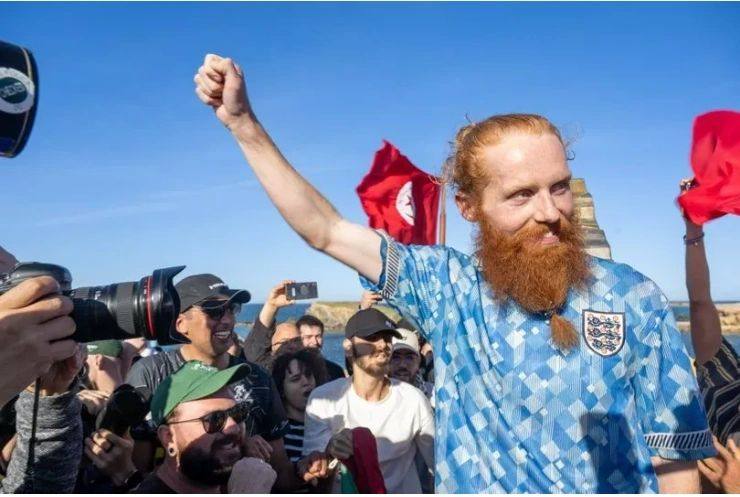 Russell Cook arrives in Tunisia, the first to run the length of Africa but according to who's defintion? Photo: @Hardestgeezer
Has Guinness World Records lost legitimacy?
Russell Cook, aka The Hardest Geezer, made headlines around the world for running the full length of Africa. He claims to be the first person to do so. No sooner had he reached the end when more headlines appeared, queering his claim. The World Runners Association (WRA) released a statement as Cook approached the end, recognising a Dane, Jesper Kenn Olsen, for running from Egypt to South Africa finishing in 2012. Not long after, another runner appeared out of the woodwork - Guinness World Records had registered a Brit, Nicholas Bourne, who had run from South Africa to Egypt in 1998 and the WRA are updating their records to recognise Bourne as the first.
Enquire about a talk today
Everyone recognises Cook's achievement is extraordinary, no one can agree if it was the first.
Welcome to the world of adventurous world records and world firsts. It is messy, confusing and full of emotions. An increasing amount of world records and world firsts are mired in controversy as no one knows who has the authority to define the parameters. It’s made worse as adventurers try to claim world firsts and records that are so idiosyncratic they are technically right, but hardly in the spirit of the endeavour.
Cook’s is just the latest in a long line of very similar conflicts as adventurers argue over geographical definitions. There are a lot of self-proclaimed governing bodies and an equal number of people who don't recognise their authority.
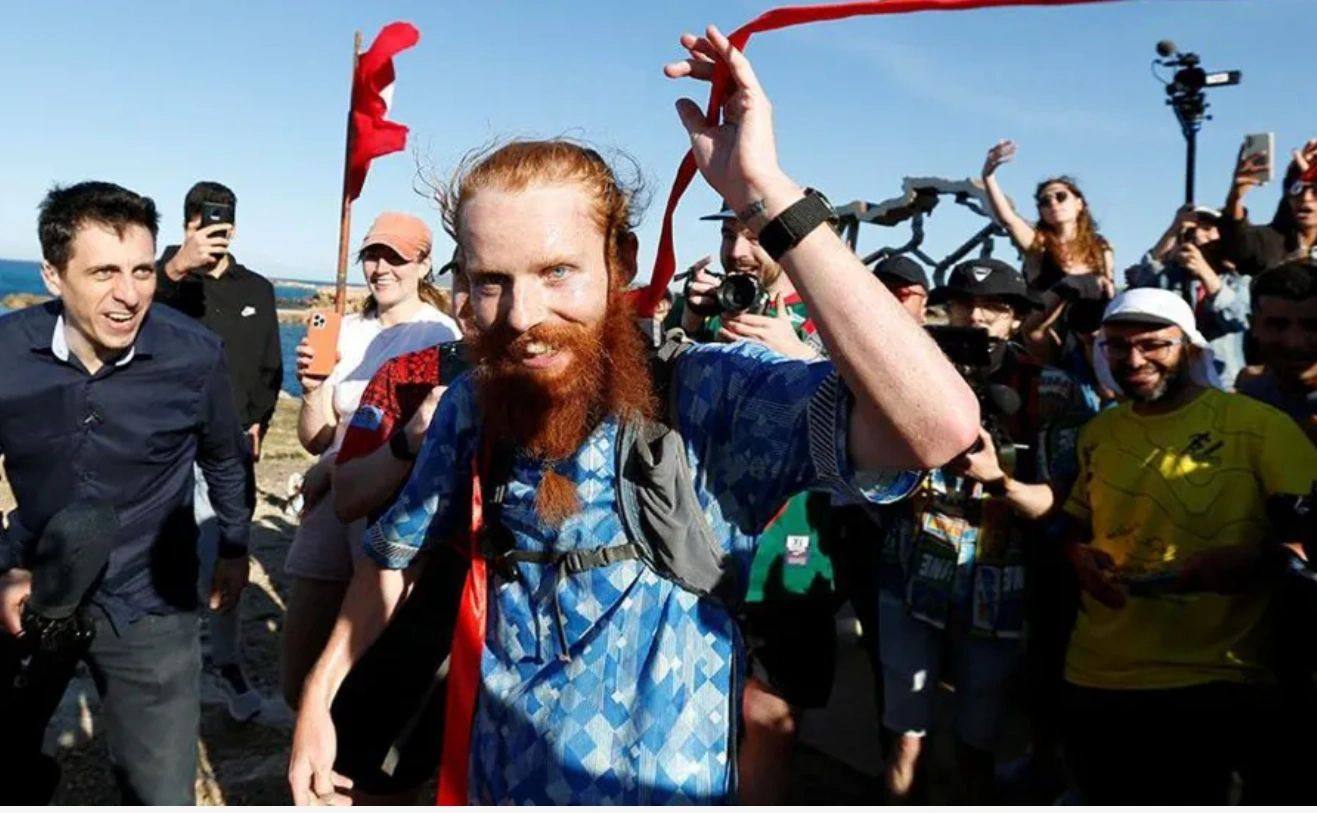 Cook finishes his epic adventure. Photo: Reuters
And Guinness World Records (GWR) are at the centre of the problem, fuelling ridiculous claims. And yet, in the public’s eyes, they have the most legitimacy.
Explorer’s Web, a respected American adventure blog, even ran an article entitled “Guinness World Records Have Become a Problem for the Adventure Community” citing the “rubber stamping [of] an endless number of adventure records, many of which are tenuous and contrived”.
For example, the first team to row from Svalbard to Jan Mayen in 2017 had an epic adventure and a valid world first. Was it really necessary for GWR to attach dozens of world firsts to the expedition including Northernmost latitude reached by a rowing vessel on the Arctic Ocean Open Waters, Northernmost latitude on land from which a rowing vessel has departed on the Arctic Ocean Open Waters, Northernmost latitude from which a rowing vessel started a north-to-south row on the Arctic Ocean Open Waters and Northernmost latitude reached by a rowing vessel on the Arctic Ocean Open Waters at the edge of the Arctic ice pack?
The "Length of Africa" debate explained
The latest controversy centres on the definition of the length of Africa. The WRA defines crossing a continent as "ocean to ocean" and at least 3,000km. Cook and his team define "the full length" as the most southern to the most northern tip of Africa. There's no doubt Cook is the first to run the most southern to the most northern tip, but does that constitute the length where other runs do not?
To Cook's supporters the answer is self-evidently yes. But why should that be the length?
Take the UK for example - most people would agree running the length of the UK is Land's End to John O'Groats. Those are the two furthest away points from each other in a straight line. But they aren't the most southern or northern - that's Lizard Point and Dunnet Head. If you think the length of the UK is Land's End to John O'Groats, and not Lizard Point to Dunnet Head, then let's be consistent when talking about Africa and find the two furthest away points on the continent. It seems as valid a definition as the most southern to the most northern point. Or the WRA's definition for that matter.
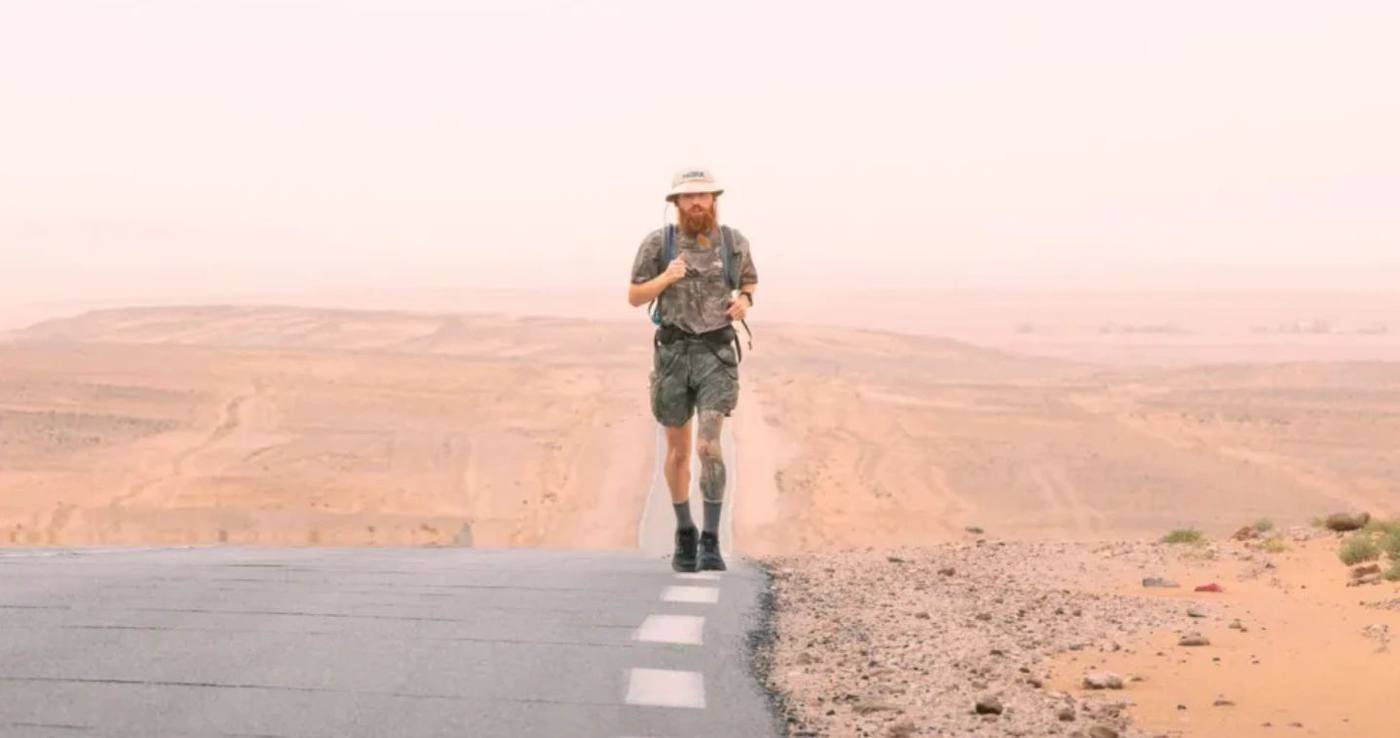 Running the length of Africa.
(Not to mention the islands of the UK, would you have to run to the top of Shetland by island hopping? What about the Crown Protectorates like Jersey, do they count? Maybe someone should run the length of the UK starting on the Falkland Islands - we made a massive effort to keep them as part of the UK, it would seem a pity not to include them).
Nothing is as self-evident as it seems.
Who are the governing bodies?
Who has the right to define the length of a continent? The WRA clearly thinks it's their right. In fact, in their statement they said they "reserve the right" to define continent runs - reserve it from who? From me? From Cook? Cook isn't a card carrying member I assume.
GWR’s definition agrees with WRA but what if GWR changed their minds, and defined crossing a continent as 'ocean to ocean' and at least 2,000km, basically the same but 1,000km less than WRA's definition - who is correct, who is the governing body? What gives them any more authority than Cook and his millions of followers? What gives Cook the right for that matter?
When I asked the WRA what gave them authority, they said they adjudicate round the world runs, and by extension crossing continents. They vigorously examined Jesper Kenn Olsen’s GPS and other tracking data to make sure he had run from Egypt to South Africa. “So that's our authority right there,” the spokesperson said.
I don’t doubt their work in validating Olsen as doing what he said they did. It’s still unclear to me why this empowers them to define the length of Africa over anyone else.
This has happened before - Aged 72, Graham Walters was recognised by GWR for being the oldest person to row across the Atlantic in 2020. He made headlines around the world. About a year later, those same newspapers printed nearly identical headlines about Frank Rothwell, 70, as the oldest person to row across the Atlantic.
Who's in charge here?! Where are the adults?!
Walters had been towed for the last few miles, so though it counted in the eyes of GWR, it broke the rules in the eyes of Atlantic Campaigns, the annual Atlantic race organisers. Thus Rothwell was the oldest to cross "unassisted" according to Atlantic Campaigns, which trumped Walters. But Walters was still the oldest according to GWR.
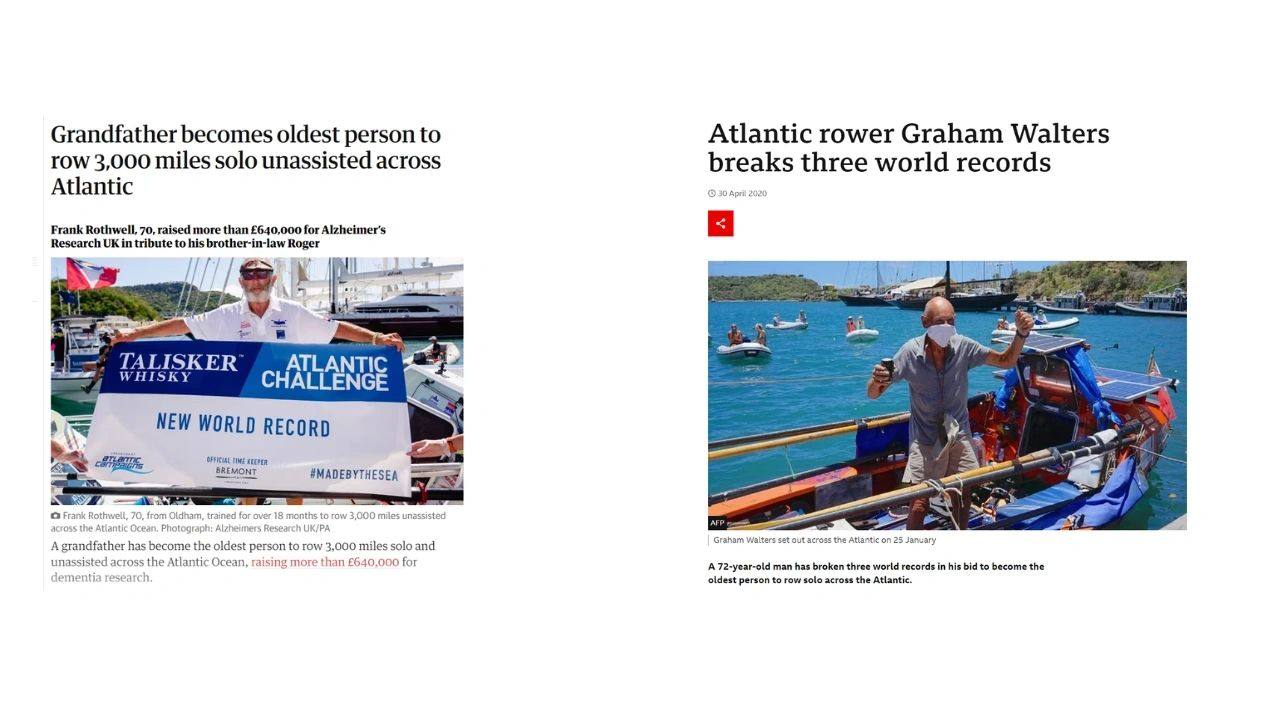 Frank and Graham can't both be the oldest person to row an ocean.
Rothwell rowed the Atlantic again, aged 73 and can now claim the record free from debate. GWR seems to recognise both of them - it calls Rothwell the "Oldest person to row across the Atlantic solo" and Walters the "Oldest person to make a solo human-powered ocean crossing".
Both of these records cannot be true - whoever is the oldest to row the Atlantic is also the oldest to do it under human power. More proof of the ridiculousness of GWRs throwing mud at the wall approach.
Asking, "who is the governing body" and "who has the right to define the length of Africa" provokes more questions than it answers. Everyone has the right. No one has the right. What is self-evident to some, is not to others.
A controversy in Antarctica
Another high profile case that has many parallels is the width of Antarctica. In 2018, Colin O'brady became the first person to traverse Antarctica coast to coast, unsupported and unaided. The New York Times said it could "go down as one of the great feats in polar history". No sooner had those words been published than the polar community was up in arms - Borge Ousland had done it in 1997.
A different OpEd in the New York Times by the famous adventure author David Roberts said the fanfare around O’Brady had “unfairly diminished” Ousland. National Geographic ran the headline “The Problem with Colin O’Brady”.
This was full of idiosyncratic rules and definitions - Ousland had used a very small sail, on very limited occasions, and therefore it counted as "aided", discounting him as the first to do it "unaided" in O'Brady's eyes. But O'Brady had used a road, built by a steamroller flattening the way for supplies - did that not count as aid too?
What's more, coast to coast is a tricky definition. Antarctica is surrounded by permanent ice. When you walk on the ice, it feels like land. In fact, when you cross from land to ice you would not notice. O'Brady stopped at the edge of the land mass ("The Coast") - a fairly arbitrary location in real terms, even he called it “this invisible line”. If he was to be picked up by a boat, as per the traditional polar explorers, he would have to walk hundreds of more miles across permanent ice that felt like land to reach the practical coast. Whereas, Ousland walked from the sea to the sea - almost twice the distance O’Brady travelled.
So who was the first? O'Brady may be pedantically technically right, and in being so, invalidates Ousland. Ousland for all practical purposes was the first to traverse Antarctica coast to coast, unsupported and unaided (before those definitions were even a thing).
Exhausting work.
I wrote an article for the South China Post in 2019, defending O'Brady, essentially saying "rules are rules". Now, I'm not sure what the rules are or who gets to make them. My opinion has softened. It's not that I have a strong opinion now, it's just that I think it's all an arbitrary mess.
Can't we all just get along?
I spoke to Bourne, the Brit who ran from South Africa to Egypt in 1998. He had a commendable attitude.
Instead of asserting his claim to be the first, he called it a "storm in a teacup", congratulated Cook and wished we'd all just focus on Cook's charity fundraising efforts.
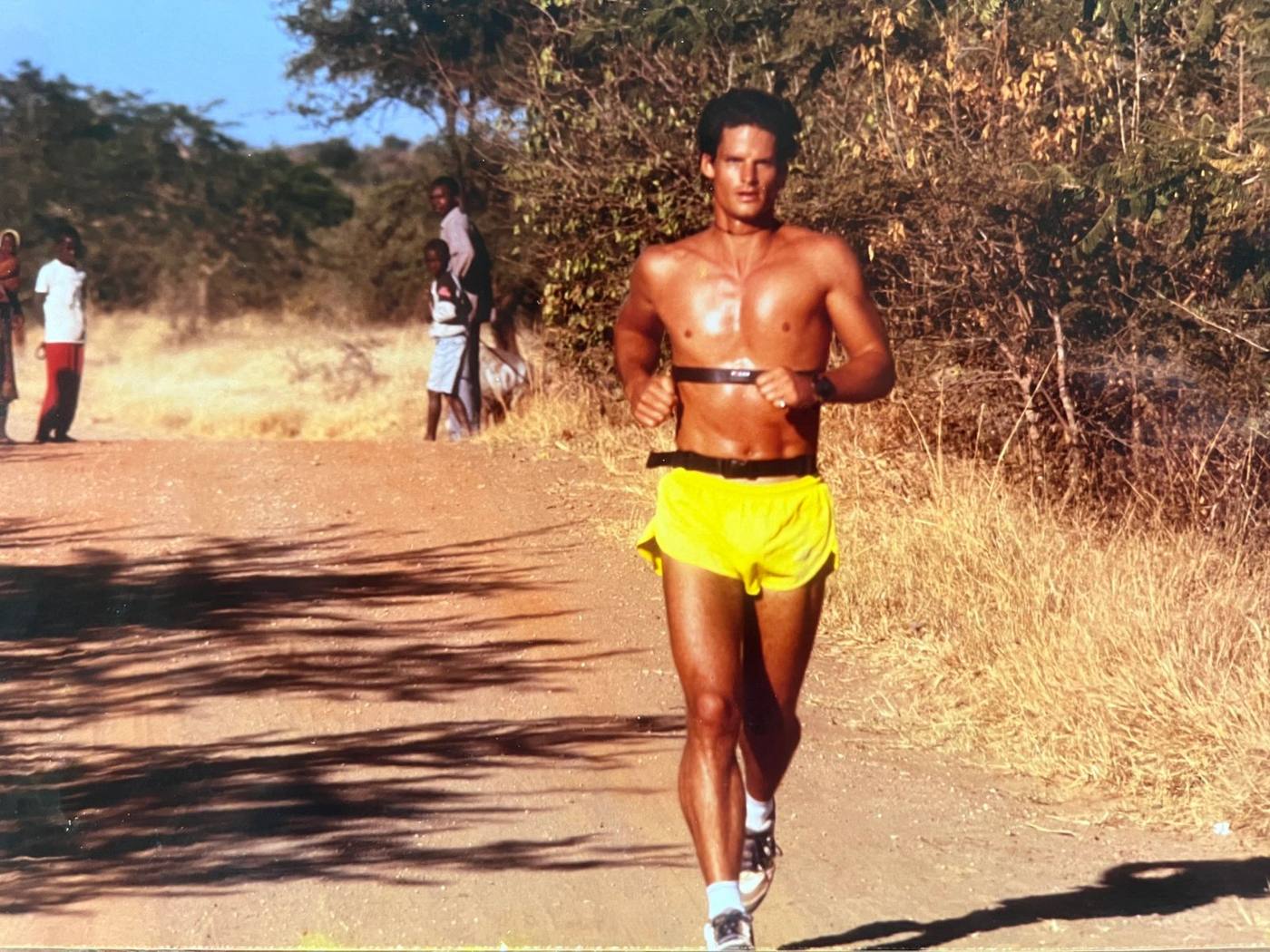 Bourne runs the length of Africa in 1998.
"We love the challenge. We love the training. We love getting out in the fresh air and meeting people. I think it should be a force for good rather than a force for starting another conflict between human beings,” Bourne said.
We can all learn a thing or two from Bourne.
Practising what Bourne preachers
My three teammates and I, called The Arctic Cowboys, are the first people to kayak the Northwest Passage. We are also the first to complete the Northwest Passage by human power, no motors or sails, in a single season.
We crossed the internationally recognised boundaries of the Northwest Passage, as defined by the Canadian Government and the International Hydrographic Organization - from Baffin Bay to the Beaufort Sea.
I say first by human power "in a single season" because Charles Hedrich, a Frenchman, rowed the Northwest Passage over multiple seasons. He went home for the winters and returned for the brief summer to complete the adventure over three years, finishing in 2015.
Except, he followed the GWR definition of the Northwest Passage. I think the GWR definition is self-evidently wrong. I have no idea where they've pulled it from. It seems completely arbitrary, with no basis in history or geography. GWR definition is 300 miles further than the western boundary and 40 miles short of the eastern boundary of the Northwest Passage. It’s a bit like climbing Everest all the way from Kathmandu and stopping 40 metres from the summit, as my teammate has said to me before.
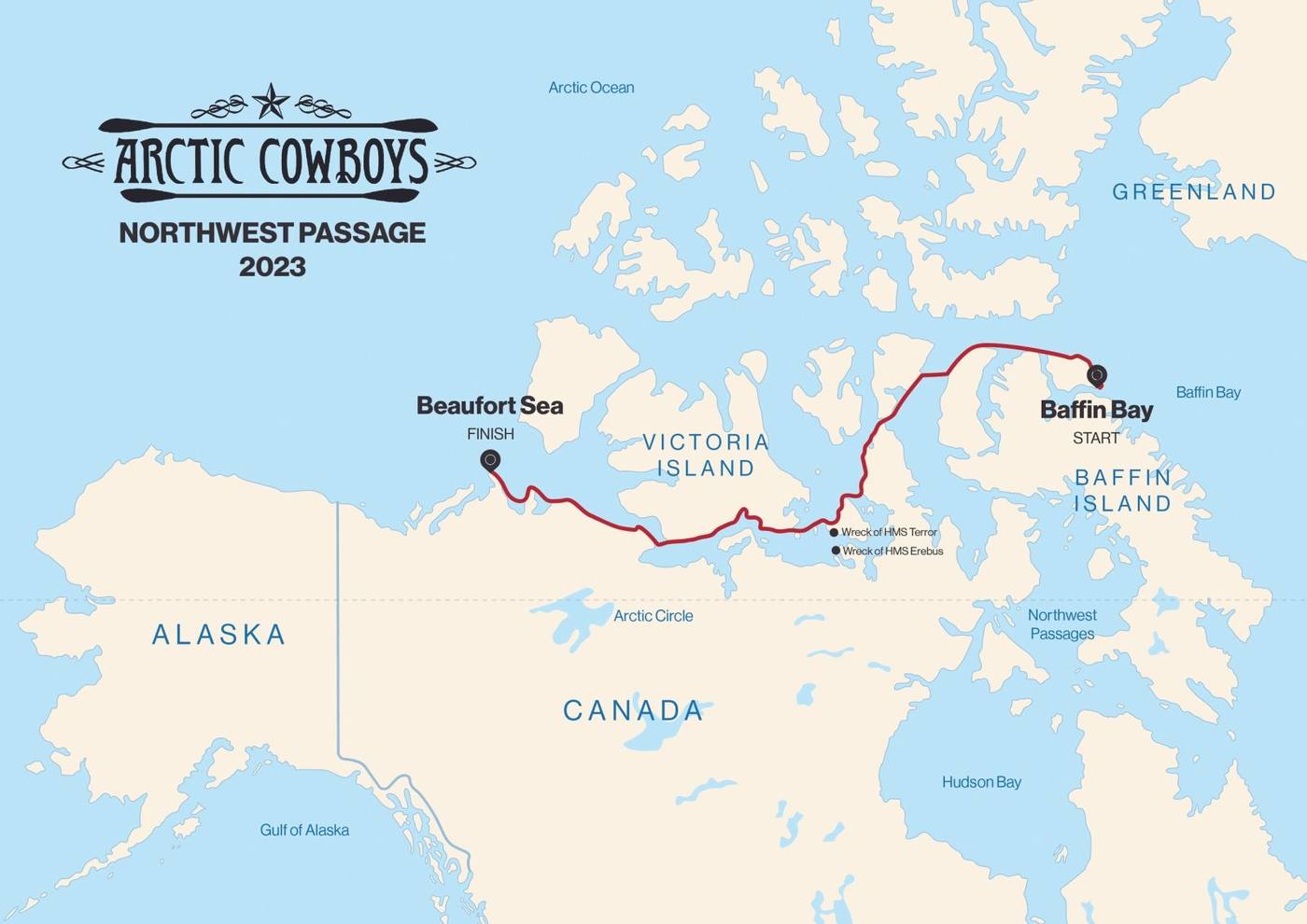
The Arctic Cowboys have not sought GWR recognition and never will because we do not recognise their definition. We’re not alone in this. I can't find another team who has attempted the NWP by human power that has followed the GWR definition. Along with the ExplorersWeb article calling GWR a problem, there are a number of other examples online of adventurers’ indifference to GWR.
In an Outside Magazine article about GWR stripping the greatest mountaineer of all time, Reinhold Messner, of his claim to be the first person to do all 8,000m peak, it said: “Freddie Wilkinson, an alpinist and guide who has written extensively about the 8,000-metre peaks, said, “I personally don’t recognize Guinness world records as having any sporting authority over alpine climbing.” It seemed Messner himself was also indifferent to whether GWR recognised him or not.
A Guardian article said (not specifically of adventures to be fair): “Anna Nicholas, who worked as the head of PR for the (GWR) book in the 80s and 90s, she lamented how things had changed: records are now more sensationalist, she said, to meet the demand of an audience that can see extraordinary things whenever they like on social media.”
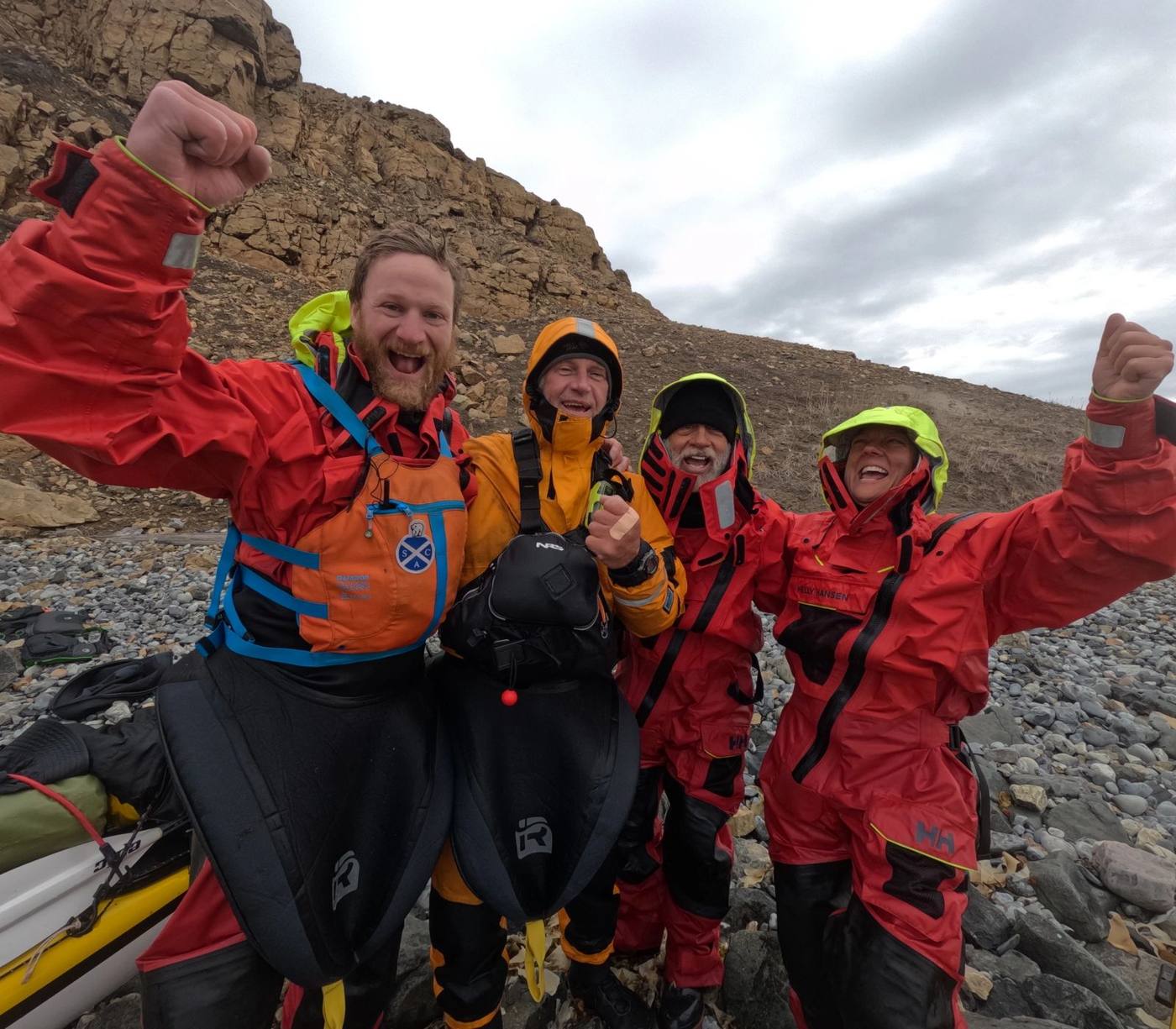 Adventure is not about the start of finish, it's about everything that happens in-between.
How can GWR be the authority that defines the maritime definition of the Northwest Passage, the most egg cups filled by moving an egg with the breath in one minute (16 by Ashrita Furman set in 2016), the oldest person to row the Atlantic, the oldest person to cross the Atlantic with human power and the world’s tallest horse - it seems like a wide remit for one body. I don't have a good answer for who should record records - it is incumbent on the adventurers to research their feats and be transparent (and not add to the problem by claiming the most idiosyncratic world firsts possible). I can also see this approach getting messy though.
With my disregard for GWR in mind, if I was consistent I'd say Hedrich did not complete the Northwest Passage and we were the first to do it under human power FULL STOP, no caveat about seasons. But I don't (except here of course, which sort of undermines my point but humour me).
Why would I? What would I gain? We both had amazing adventures. I'm sure we had many similar experiences. I would love to go for a beer with Hedrich and compare our adventures, revelling in our shared experience rather than squabbling over petty differences. I will always continue to call us the first to do it "in a single season", out of respect for Hedrich, even if our definitions differ.
Maybe one day someone will openly challenge our world first claim. I'm very proud of what we did so I would find it hard to be zen like Bourne, but I'll try my best to remember his advice - adventure should be a force for good.
Adventure isn't about the start and finish points, it's about everything that happens in between.