 Mark Agnew
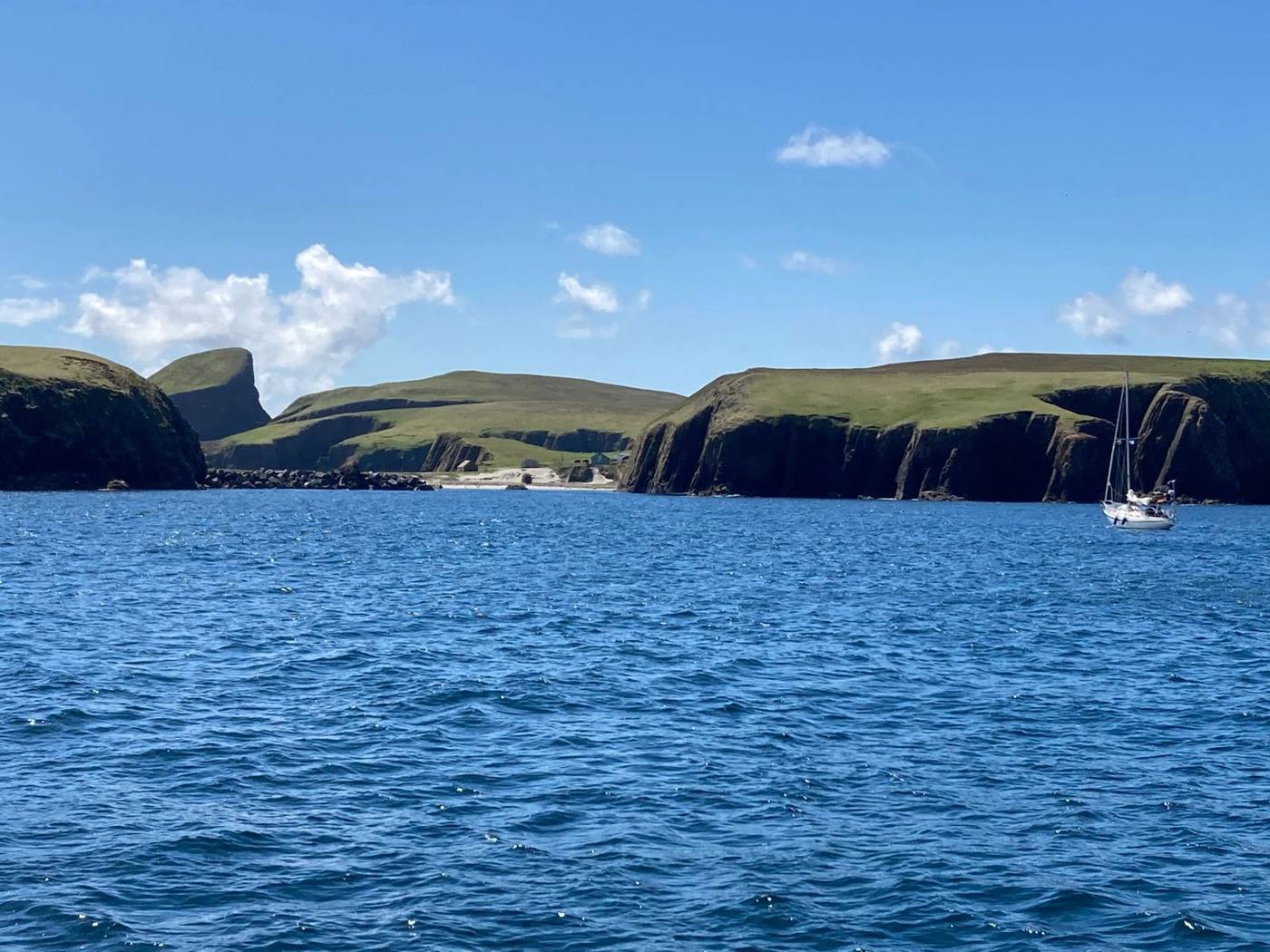 Arriving at the only harbour on Fair Isle, one of Scotland's most remote islands.
Fair Isle sits between Shetland and Orkney
We had been floating aimlessly through the Moary Firth for three days. We were sailing north, but the windless conditions meant we were barely sailing at all. The sea around us was like glass and the only break in the view was the Fulmars, a bird from the albatross family, gliding over the surface.
My dad and I were sailing to Shetland, and despite the conditions, were enjoying the peace and tranquility of the motionless ocean. On day three of our float north, we saw clouds on the horizon that hailed a cold front, and wind, coming our way.
It is incredible how quickly the environment can change. Within an hour, the front had reached us. We went from a pondlike conditions to fast sailing. The boat healed over as we tore through the surface heading, finally, towards our destination.
Early in the morning, as I slept and my dad stood on deck. He called me. I woke up and arrived on deck. Appearing ahead of us was the faint outline of an island.
As we drew closer, the immensity of the speck dawned on me. This was Fair Isle, one of the most remote Islands in Britain. It is technically part of Shetland, but is halfway between Shetland and Orkney, seemingly completely isolated.
The sun was rising and cast an orange hue across the rocky island. Apparently people live on it, but I couldn't work out how. There seemed to be no way on or off. Sheer cliffs came straight out of the water for 130 metres before flattening into a barren grassy plateau.
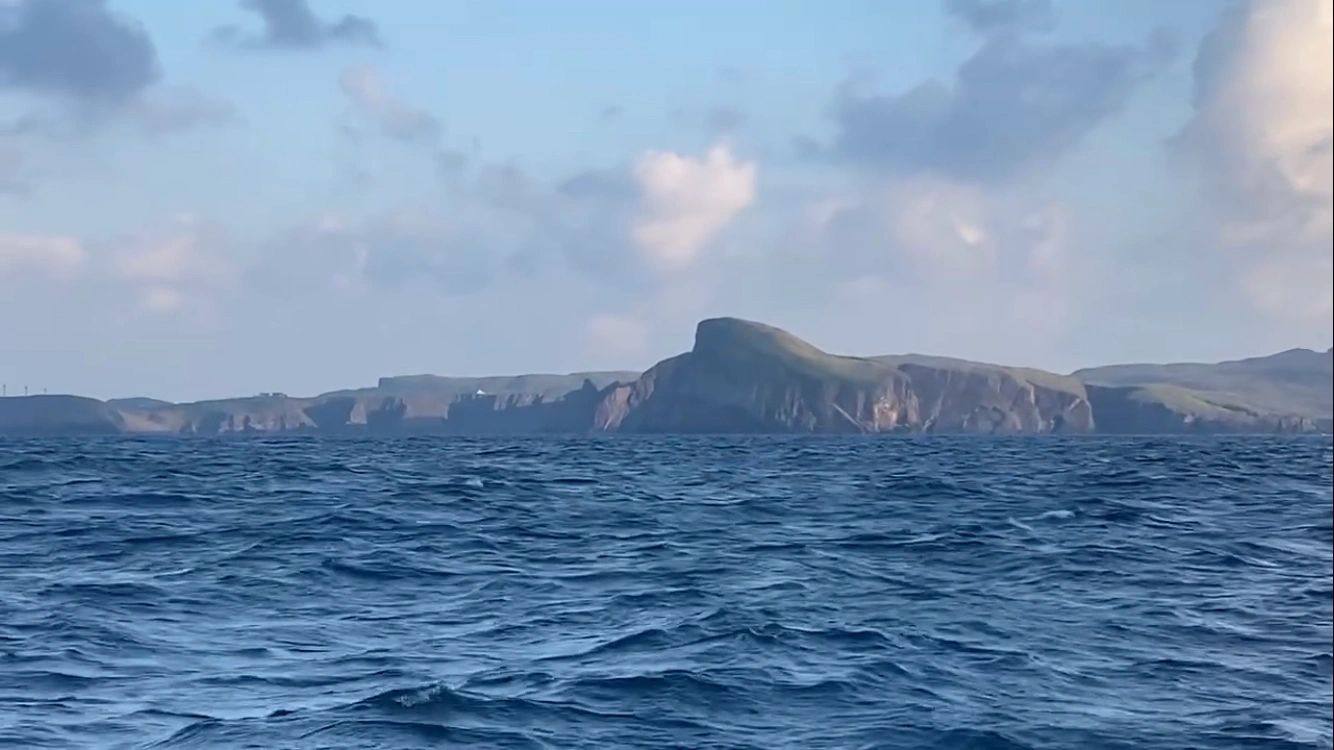 Our first sighting of Fair Isle, towering out of the sea in the morning sun. Sheep Rock looms large in the foreground.
One feature in particular dominated the view. Sheep Rock, a 130m finger stuck up into the sky, detached from the main body of the Island. We wizzed passed Fair Isle onward to Shetland but I was fascinated by it. Fortunately, I did not have long to wait to see it again.
A few days later as we sailed south, we headed for Fair Isle. The conditions were even bigger than when we had passed a few days earlier. Large 5m swells rolled in from the west and the bow of our boat reared into the sky and plunged into the troths between each oncoming swell.
Read More: Epic adventure kayaking around Mull
Another boat was sailing in the same direction, and it looked beautiful as it plowed forward.
Soon Fair Isle appeared on the horizon, and eventually we were protected from the wind and swells in the lee of its cliffs. We were heading for the only harbour on the island. A break in the cliffs that wound down to a stunning little beach with a pier.
Once settled and tied up, we shared a drink with the other sailor we'd seen crossing from Shetland and set off to explore the Island.
There are about 60 people living on Fair Isle, and even a small primary school. The Island was in the news last year, as they school needed a new teacher.
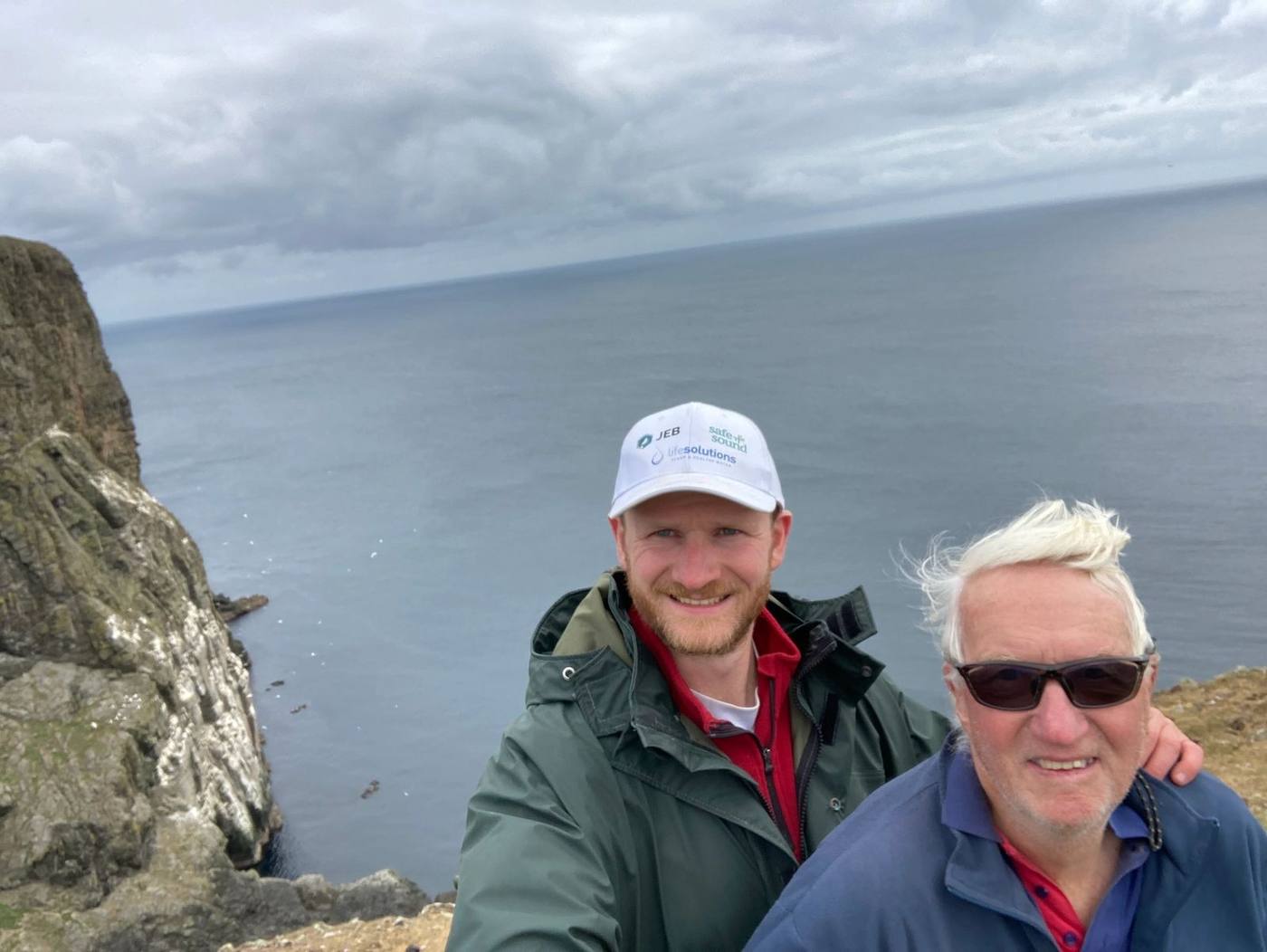 My dad and I stand on the cliff tops with Sheep Rock behind us.
The Island is famous for its Fair Isle jumpers. The patterned wooly jumpers sell the world over and now fetch a hefty price in the region of GBP150. The island traditionally relied on agriculture, and most of the inhabitants were crofters. This still is an important part of the local economy.
We wondered around the Island, which is only about 7.68 km². There was the rusty engine of a crashed plane from World War Two, and lots of Arctic Skewers. The large aggressive bird dive bombed us to protect their nearby nests.
Fair Isle is famous for its bird life. There was a fantastic bird observatory built in 1948, just above the harbour. It was rebuilt to the cost of GBP4m in 2010 but burnt down in 2019. At the time, the flattened earth where it once stood was all that remained of the building, but construction on a new observatory has begun. You can donate to help the rebuild here.
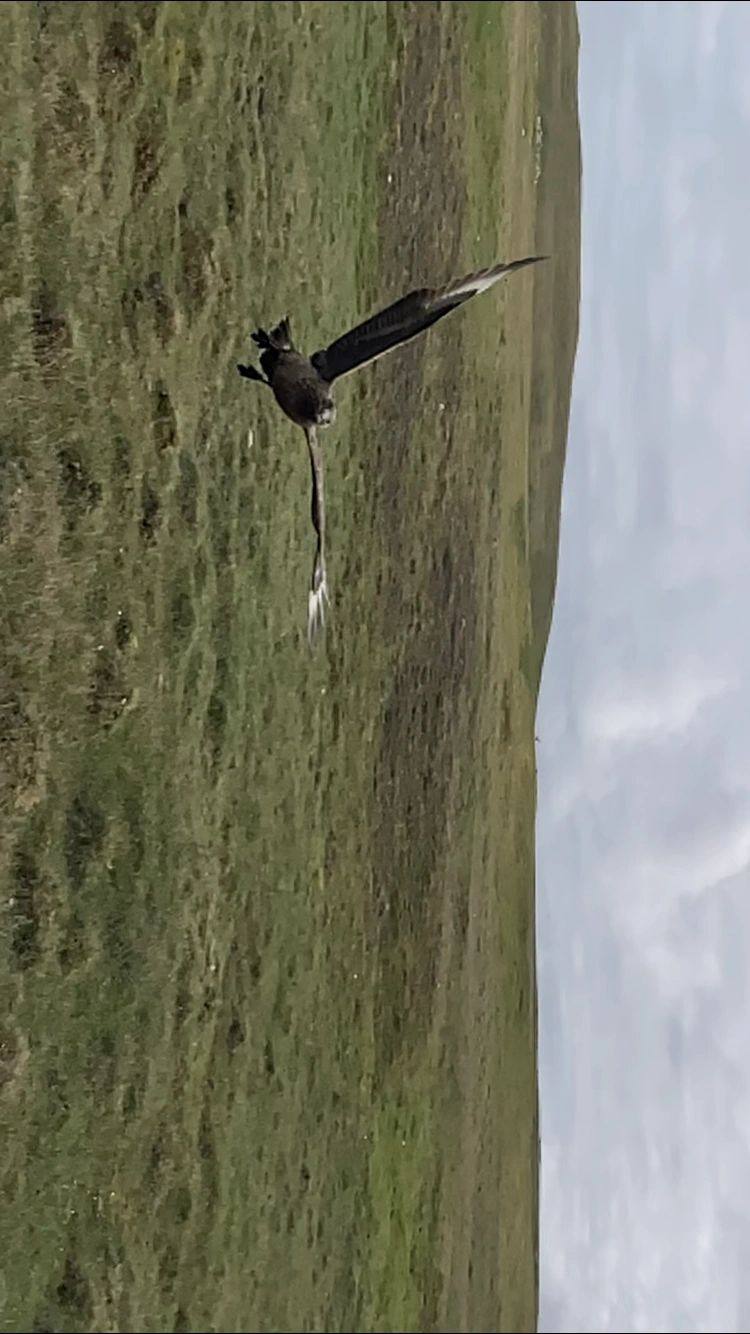 An Arctic Skewer swoops towards us to defend a nearby nest.
My dad and I sheepishly walked along the cliff tops, suffering from vertigo as we looked down to the sea below. We looked over to Sheep Rock and marvelled at the skill of the shepherds who apparently moved their sheep to and from the towering formation.
We stayed a night in the harbour, and soon it was time to go. We sailed south towards Orkney and watched as Fair Isle disappeared over the horizon. Even for such a small Island I felt there was more to see.
The West side of the Island is home to even higher cliffs, that are exposed to the full might of the Atlantic. Perhaps one day we'll return and watch and listen to the swells boom against this remote and ancient Fair Isle.